Camping in Lake Tahoe with my sketchbook
I went camping at Lake Tahoe with my sketchbook, and I came back with more than drawings.
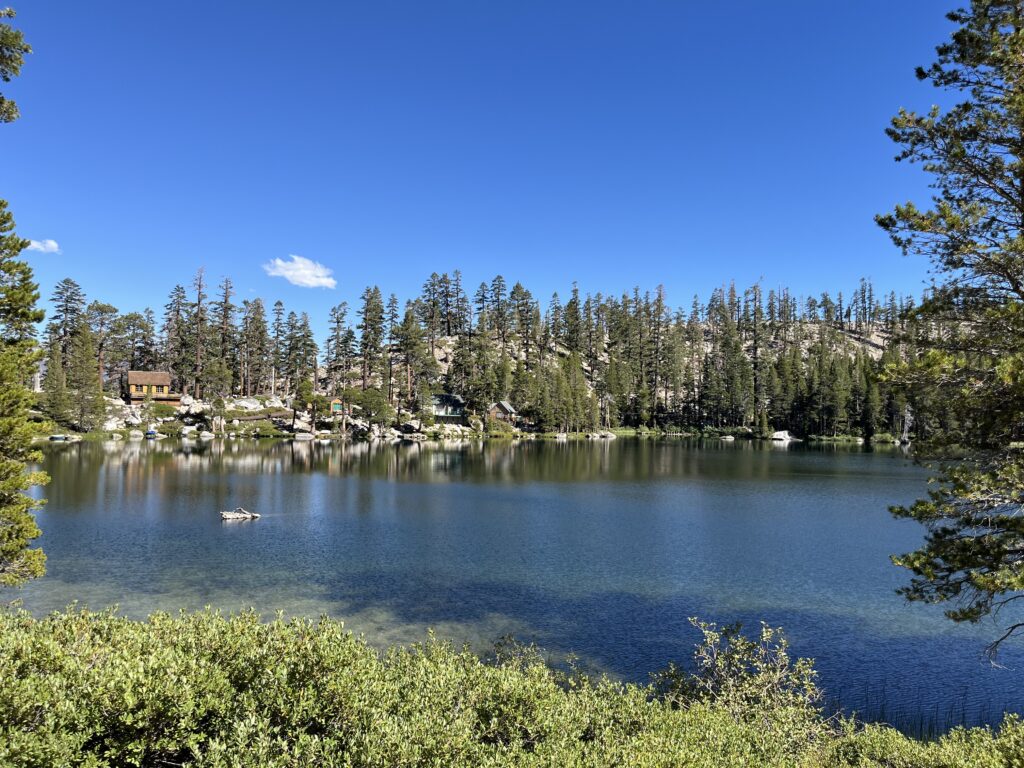
The days passed quietly along the shores of a beautiful lake that holds the echoes of the Washoe native people, who considered it a sacred place where the sky is reflected on the earth. Earlier, I shared the first days of camping and painting by a smaller nearby lake called Fallen Leaf, but now I want to show you the beauty of South Lake Tahoe — a place where the lake stretches endlessly between the mountains and everything feels calmer.
Camping for a Week
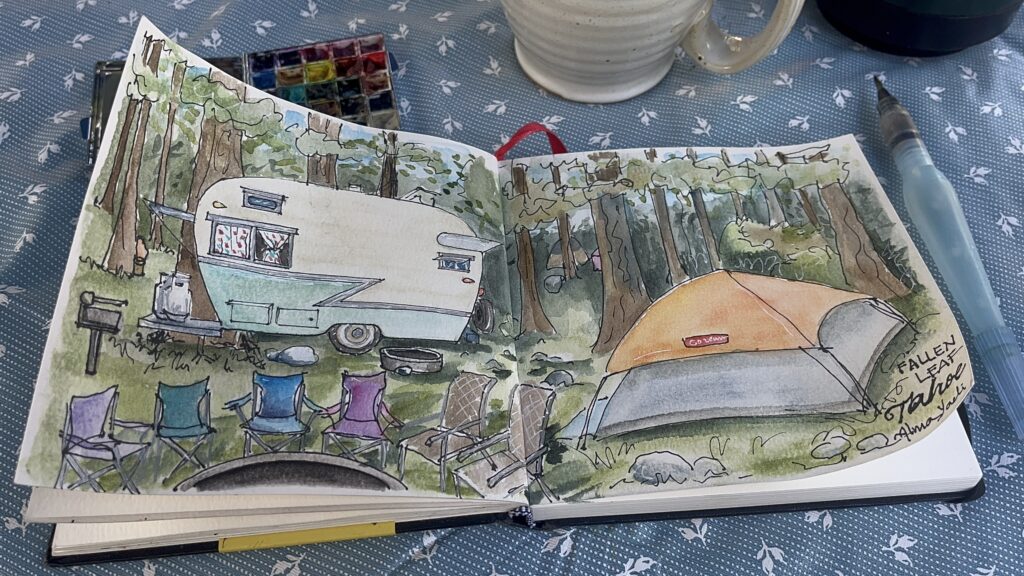
Camping for several days allowed me to experience nature up close, and at the same time appreciate everything architecture has given us. We were well equipped: my in-laws and siblings-in-law are very experienced campers and brought chairs, a table, a stove, and everything we could possibly need.
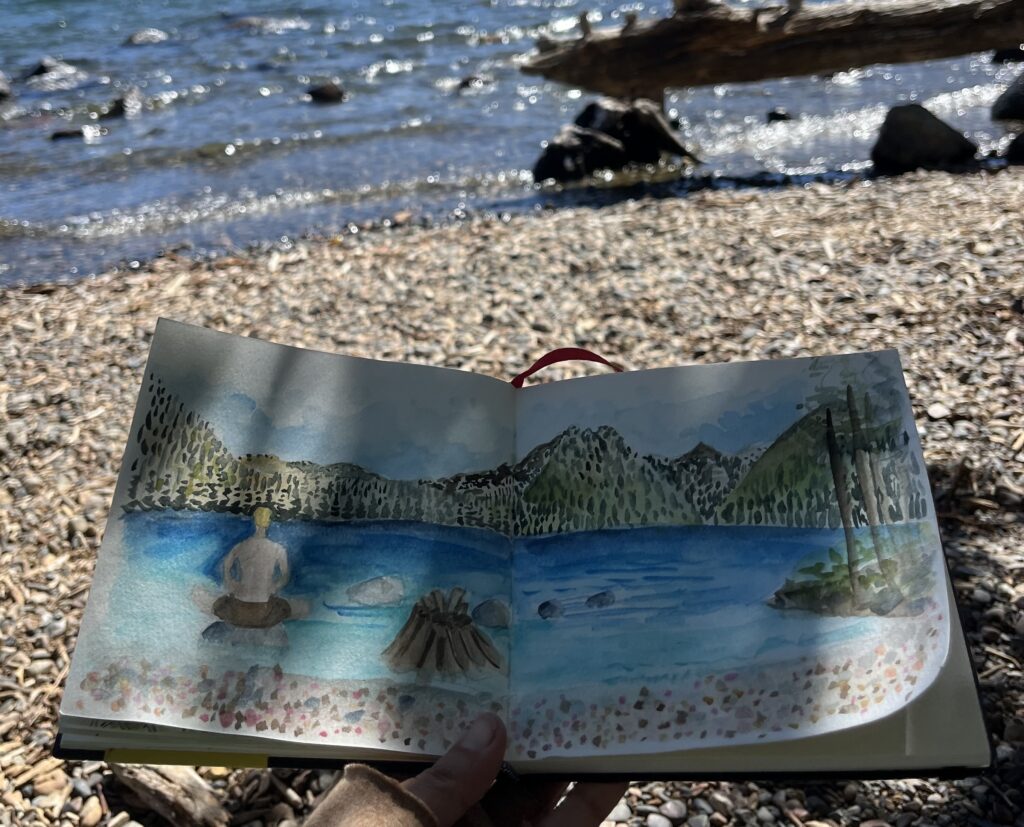
That morning we walked from the campsite and quickly arrived at the southern part of the lake, which feels vast and open. The others arrived by bike, but we soon realized that the shoreline was quite narrow, so we started looking for a small beach where we could rest. We found one and set up our hammock. I took the time to rest, feel the wind, the sand, and simply be present.
The lake is so large it feels like the ocean. The water was freezing, but I dared to dip my feet in; the cold woke me up and made everything feel more vivid. The water was calm, with only small ripples gently moving across the surface. In nature, I feel at peace.
Drawing, Observing, Being
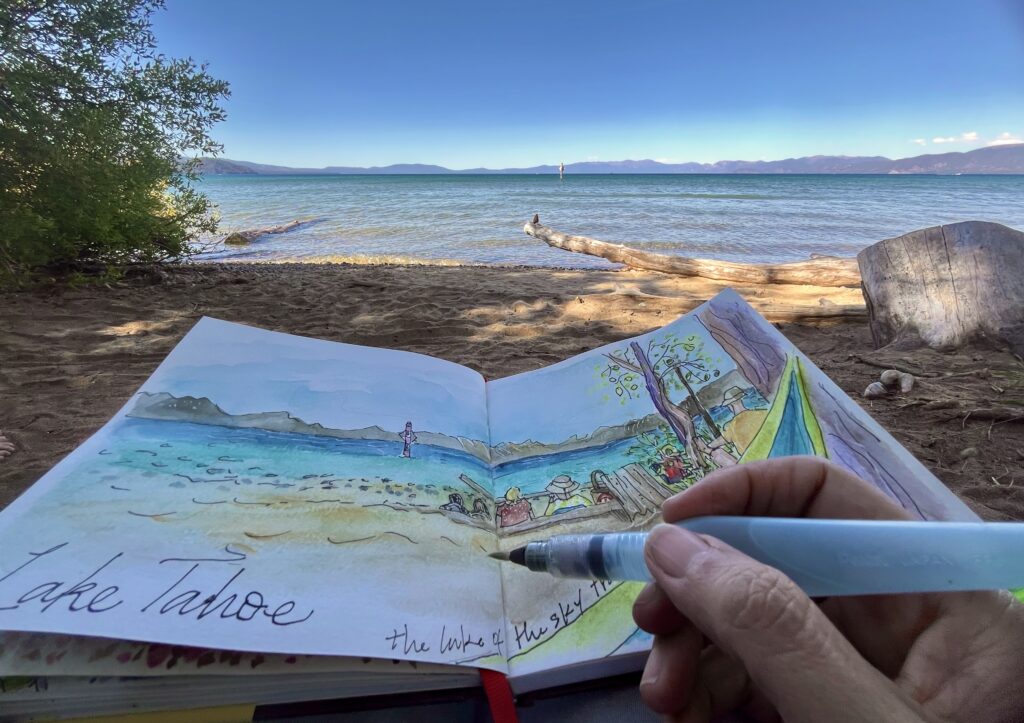
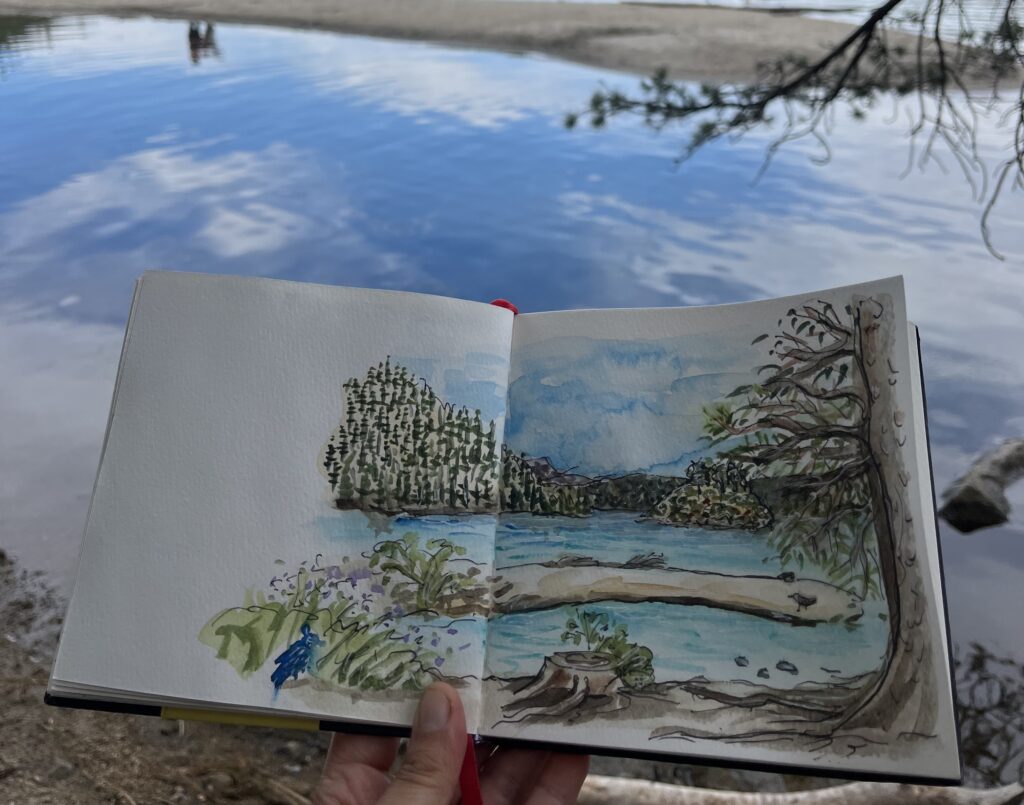
I took out my sketchbook and observed everything around me to decide what to paint. I found a beautiful red pine cone and studied it for a while, thinking about painting it, but in the end I decided to capture the entire landscape I could see from the hammock — including part of it. A family memory.
After a few hours, everyone left and Quinn and I stayed a little longer, enjoying the scenery. Spending time in silence in nature helps us reconnect with ourselves — something that’s easy to forget in the city. These spaces allow us to rest, process, and let go of what we carry inside.
It’s good not to rush, just to be. Here, it’s easy to focus on things we normally don’t have time for: painting, thinking, creating. Real growth happens slowly, step by step, with patience and consistency. Nothing is more important than this moment, here and now. It’s a place where the mind settles and thoughts flow. The things that truly matter are usually built with patience and small steps, not quick fixes. True joy comes from contrast — from everything it took to get here. We don’t need to be anywhere else. This moment is enough.
History, Architecture, and Forest
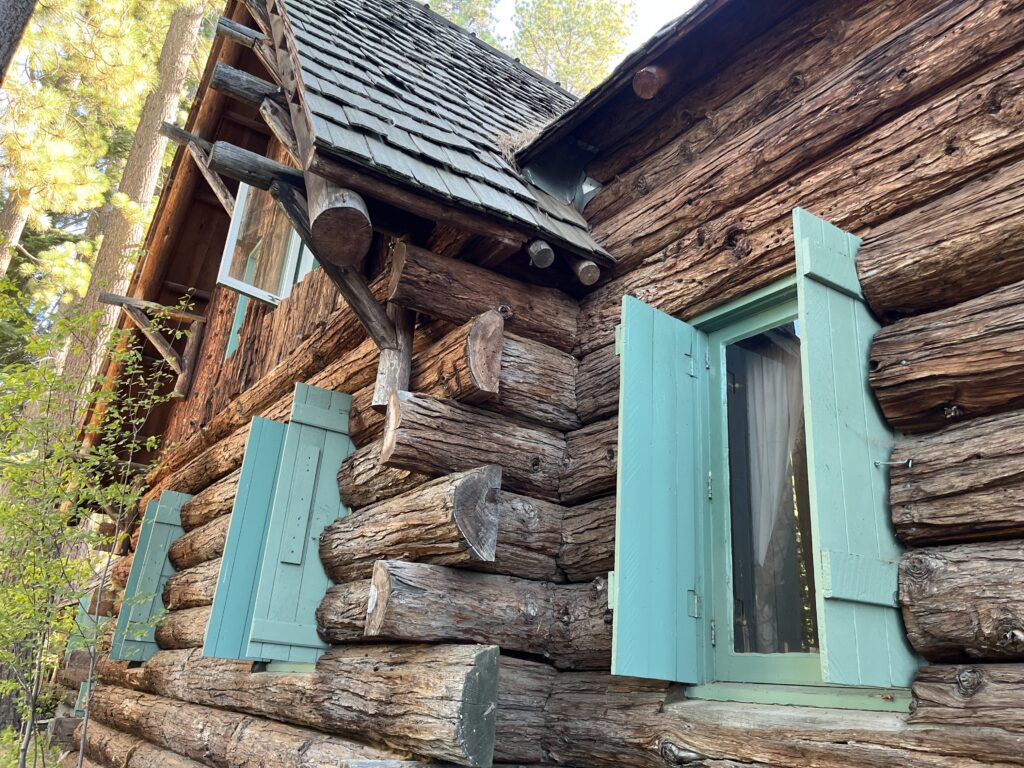
We walked and found the ruins of a former resort-casino that once belonged to Elias Baldwin. After a fire, his granddaughter, Dextra Baldwin, built a rustic summer house that is now part of the site’s historical heritage. The house is beautiful, with sage-green windows, antiques inside, and a courtyard with a well full of flowers. We sat down to rest and admire the architecture. I imagined how wonderful it must have been to live in such a beautiful cottage surrounded by nature.
We then walked back through the forest, slightly nervous about the possibility of seeing a bear, but still enjoying the landscape. The trees in that area are tall, powerful, and stunning.
Cooking, Resting, Returning to Center
Back at the campsite, we prepared simple, healthy snacks. These are the small moments that, without realizing it, become the most memorable. I love cooking outdoors and taking my time to prepare a cup of tea. When there’s no internet or social media, we can slow down and truly live the moment. There’s no pressure — it’s easy to be present.
As I prepared the tea, I remembered how much I love being in nature, how it balances my nervous system and brings me back to center. Having a small portable kitchen made things easier, but honestly, we didn’t need much: our little tent and good company were more than enough.
Living immersed in nature, even for just a few days, helped me reflect on interdependence and on how fleeting our perceptions are, moment by moment. Life is like a dream, and realizing that we are characters within that dream helps us become more aware — seeing problems as passing experiences and imagining ourselves with more freedom.
In this calm, away from the rush of daily life, every activity becomes a small ritual to enjoy. My partner and I took time to talk, connect, share, and rest.
Angora Lakes
The next day, we prepared the van — a remodeled ambulance — for a new adventure.
We packed everything we might need, prepared food for a picnic, and once everything was ready, we headed toward Angora Lakes.
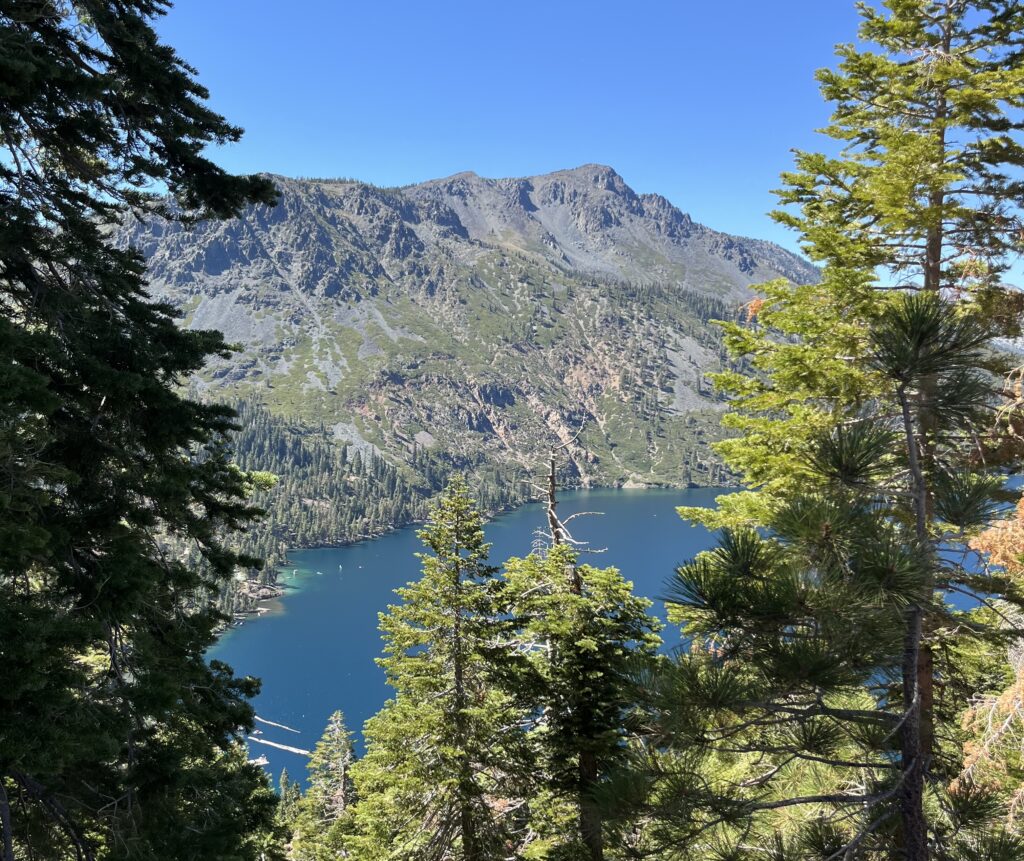
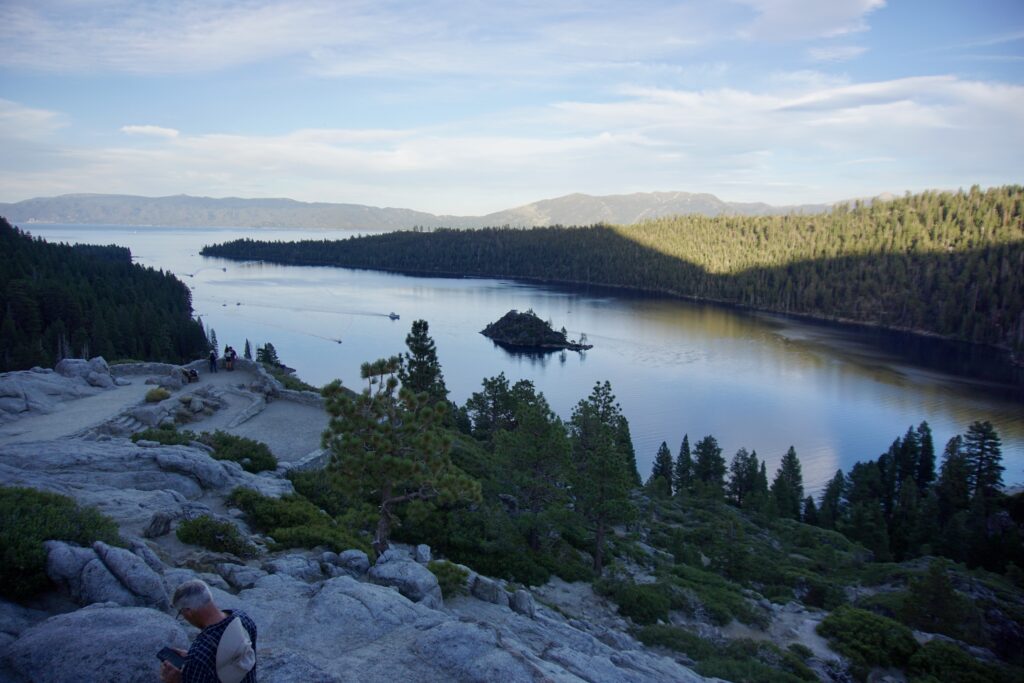
We climbed up a mountain and stopped halfway to stretch, walk a bit, and take photos. From there, the lake looked spectacular — especially Emerald Bay, with its turquoise and blue tones.
This lake feels like an ocean surrounded by mountains. On one side, the deep blue water; on the other, an open mountain landscape.
There was no rush. We simply enjoyed the moment. From there, we could see Mount Tallac, and I remembered climbing it years ago. It was challenging, but breathtaking.
Finally, we arrived at Angora Lakes — an incredible place where the mountains reflect on the water. We visited a small gift shop with beautiful items like small watercolors and bird books that inspired me to paint nature, and there was also a cozy café. Then we walked up to a higher, quieter lake — perfect for a picnic, swimming, and resting. The landscape there is stunning. Since the early 20th century, Angora Lake has been a favorite hideaway for hikers and families who came to swim, row, and drink homemade lemonade among the granite rocks. We stayed until sunset and then returned, enjoying the walk through the forest.
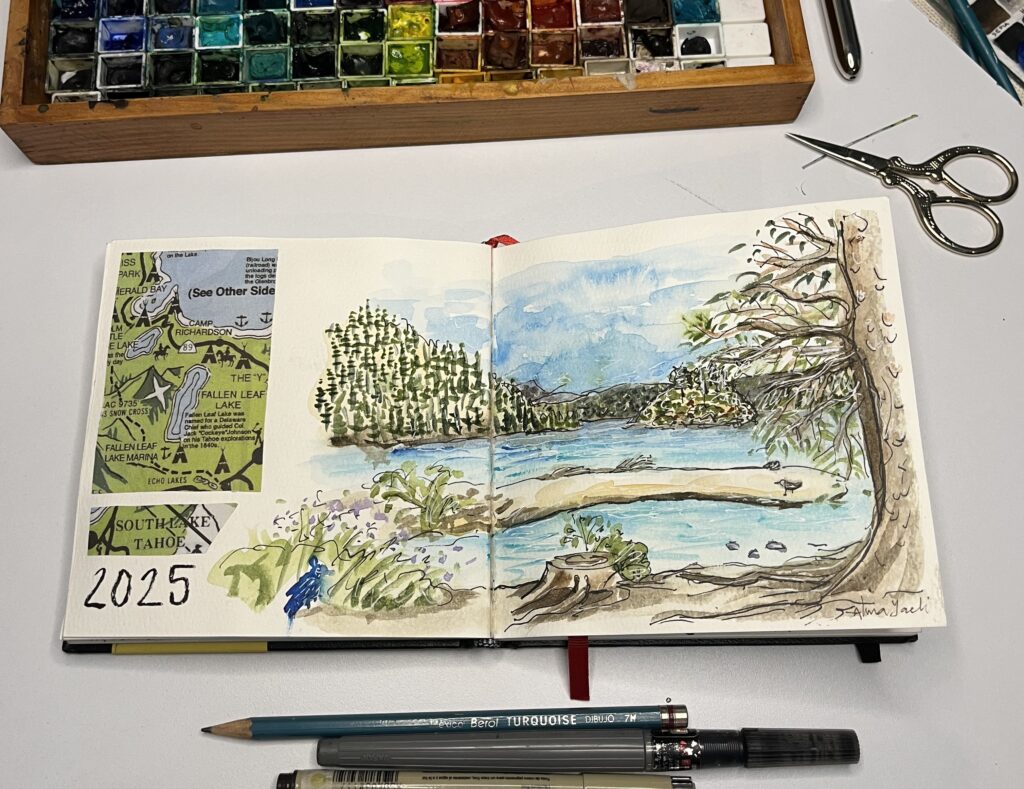
Back at the Fallen Leaf campsite, I cut out a map to glue into my sketchbook while enjoying some yerba mate.
I decided to paint that place, leaving space for the map I had saved.
Emerald Bay
On our last day, we went to Emerald Bay. Lora Josephine Knight, a philanthropist, lived here in the early 20th century and commissioned Vikingsholm — a summer house inspired by Scandinavian architecture. Here she hosted friends, walked through the forest, and spent summers by the lake, seeking beauty, calm, and time away from the city. In the small museum, you can still see photographs and objects from that time.
There are enormous sugar pines whose bark looks like a puzzle. We played with separating and fitting the pieces back together. The textures and landscape were incredibly soothing. It’s one of the most beautiful places — people come to relax, walk, and picnic with their families. We found a quieter table away from the noise and settled there.
There Were Challenges Too
Not everything was perfect, and I think that’s worth sharing. Sleeping for a week in a tent wasn’t easy. Nights were cold, and going to the bathroom in the dark — thinking about bears — didn’t help much. My body was sore, and my sleep was never fully deep.
There was also no internet, which disconnected me from work, emails, and messages. At times, I missed the comfort of a house, my studio, my materials, and even my usual space for meditation.
I decided to paint that place, leaving space for the map I had cut out.
This is how the painting turned out, with the map of the area where we had been. Painting on this cellulose paper was a challenge, but I liked the result, loose and expressive.
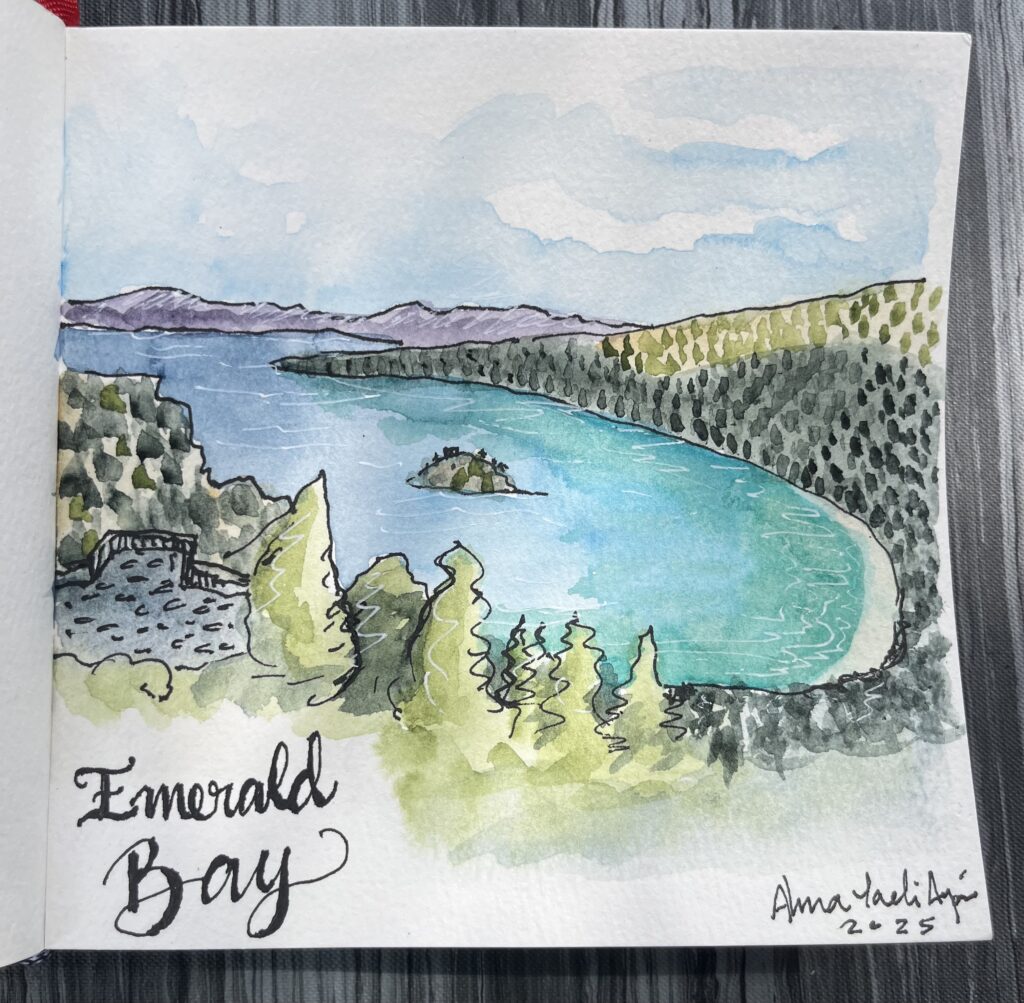
During the trip, I painted watercolors of the lake in different shades of turquoise. Each drawing is a memory of those days — of time slowing down and enjoying the present. I added a handwritten title and gifted it to someone who appreciates my drawings.
In the end, we said goodbye from above Emerald Bay, climbing onto rock formations with a breathtaking view.
Family Dinner
Later, we prepared a family dinner and lit a small fire. Cooking together was one of my favorite moments — everyone contributed something. We had delicious figs and plums from my in-laws’ garden. Min Jin is an amazing cook, and her maternal care extended to all of us.
Being kind to ourselves also means enjoying these small moments.
Farewell
Like everything in life, the week came to an end, and we began packing to return to civilization and our daily routines.
Early in the morning, we loaded the cars and said goodbye to the campsite. Before leaving, we made one last stop at the lake to enjoy the morning and go for a swim. We spent time simply contemplating the landscape, with nothing to do — just being present and connected to the earth.
Creativity emerged in those moments: me finishing details in my drawings, meditating and breathing in the landscape; the kids creating art with nature; the crystal-clear water and open sky — perfect for meditation.
My sketchbook wasn’t ideal for watercolor. The paper didn’t absorb the water well, and I had to adapt. Even so, I was satisfied with the drawings I made. They’re not perfect, but they’re honest.
And I think that was also part of the journey: learning to create without ideal conditions, accepting discomfort, and continuing anyway.
One of my sisters-in-law made a beautiful composition with colored stones, and the other created a small boat using natural elements, which she let float on the water. This kind of creativity appears when we disconnect from technology and reconnect with nature. We need to return to presence — with Mother Earth, with Tara.
Sometimes we need to step out of comfort to remember what truly matters.
I returned with more than drawings. Not with answers, but with more clarity about how I want to inhabit my days.
Back in civilization, we left that beautiful nature behind — but we carried memories that continue to accompany us, and a calm that reminds us to return to what’s essential.
Here’s the video from the trip.
Thank you for joining me on this beautiful journey. See you soon.
If you’d like to read more of the story and see additional photos and sketches, you can find them on my Patreon